

FEATURED GUIDE Style workshop
Give technical stories a human touch with paper collage
Warm paper, purposeful layers and a restrained palette can make an engineering story feel inviting without making it less precise.
4 min readRead the guide
THE RABITMOON JOURNAL
Field notes on turning raw information into visual stories people can follow, question and remember.
START HERE
Ideas, process and practical craftWarm paper, purposeful layers and a restrained palette can make an engineering story feel inviting without making it less precise.
EXPLORE THE JOURNAL
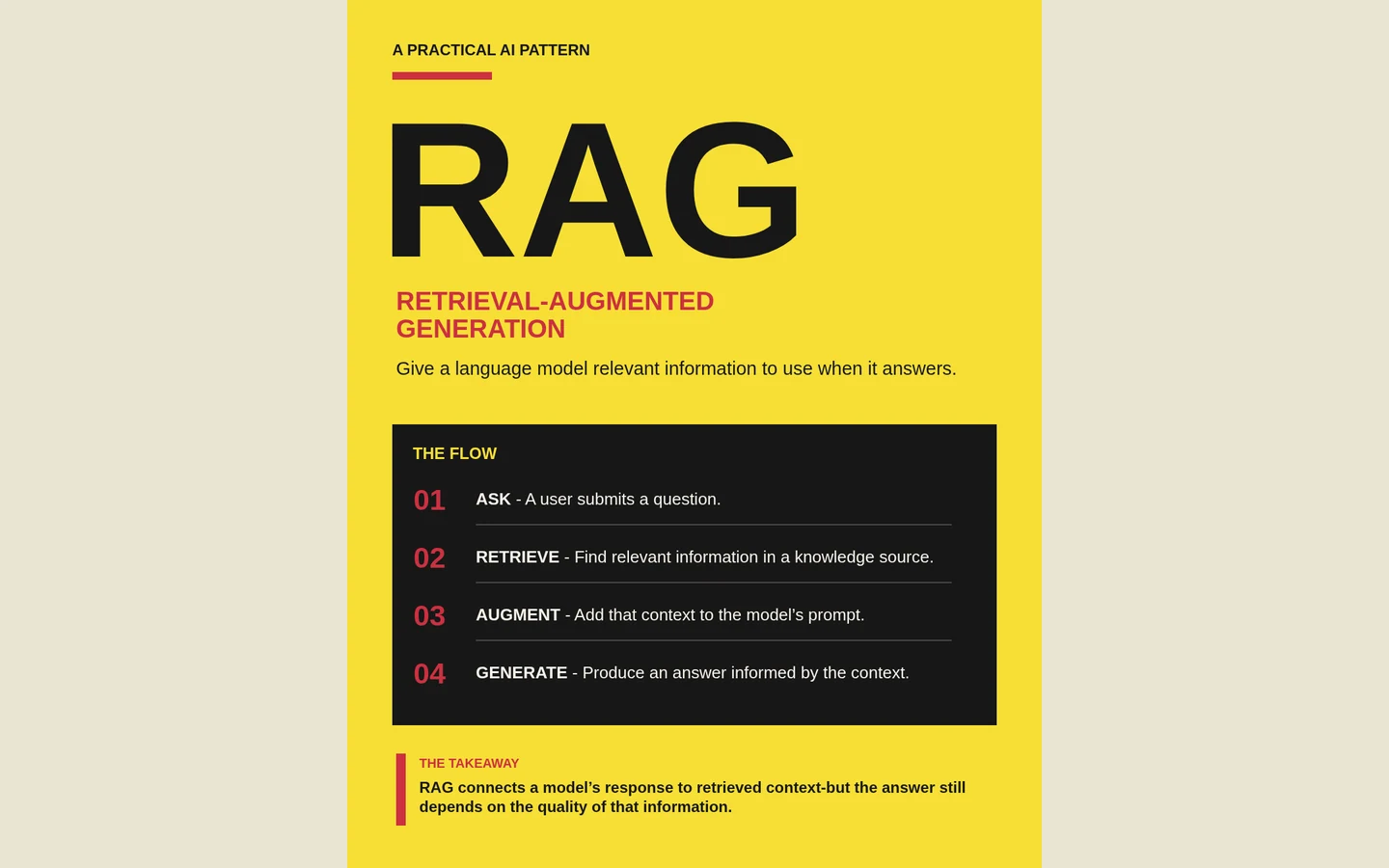
A strong diagram answers a specific question. Start there, then decide what to label, connect and leave outside the frame.
Read article
Give each page a job. Keep the visual identity steady, and let the layout change with the idea.
Read article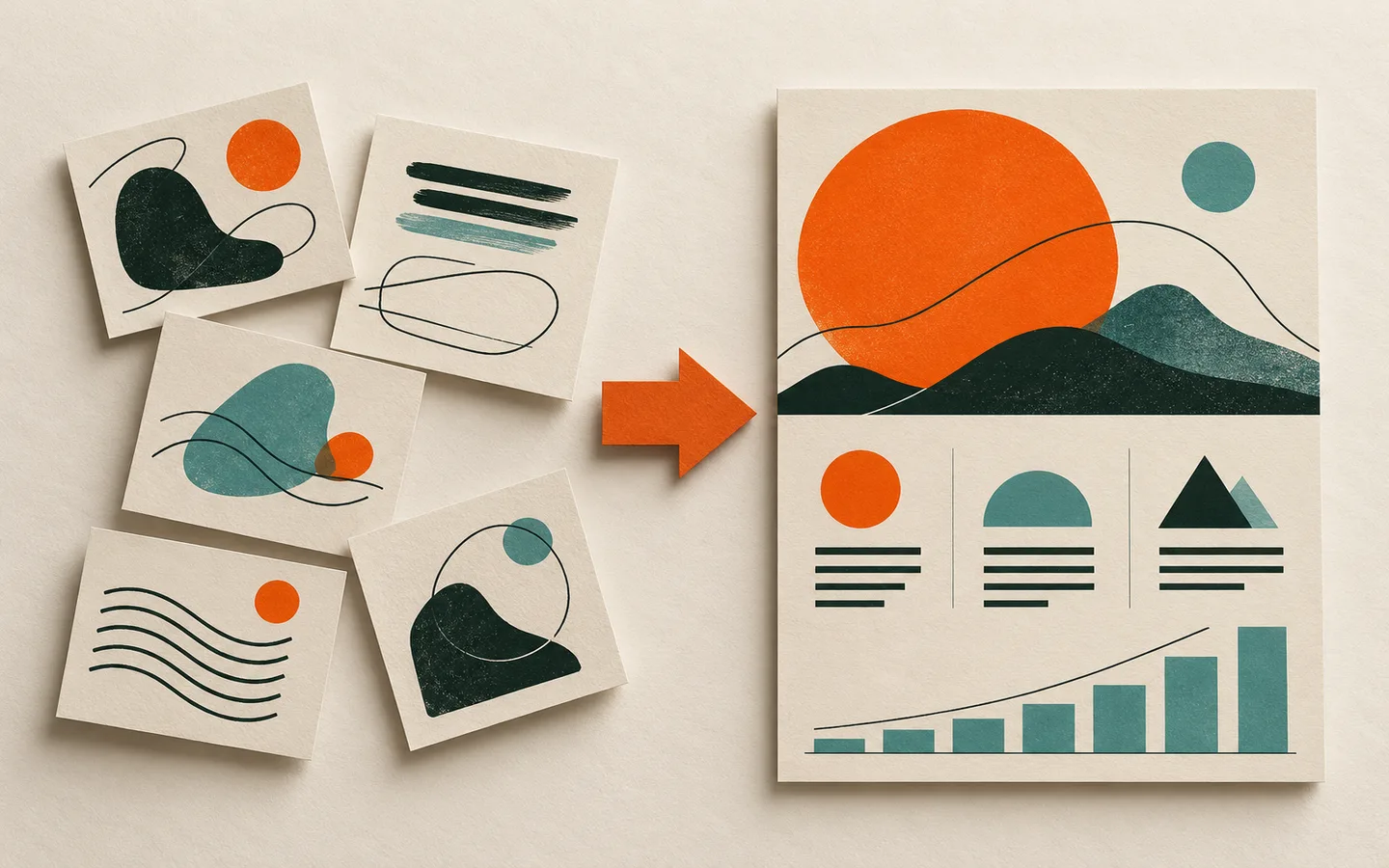
A useful prompt is a compact editorial brief: who the visual serves, what it should explain and which facts it must preserve.
Read article
Before choosing a chart style, decide whether the reader needs to compare values, follow change or understand a share of the whole.
Read article
A strong status report shows what changed, what matters next and which decision will keep the work moving.
Read article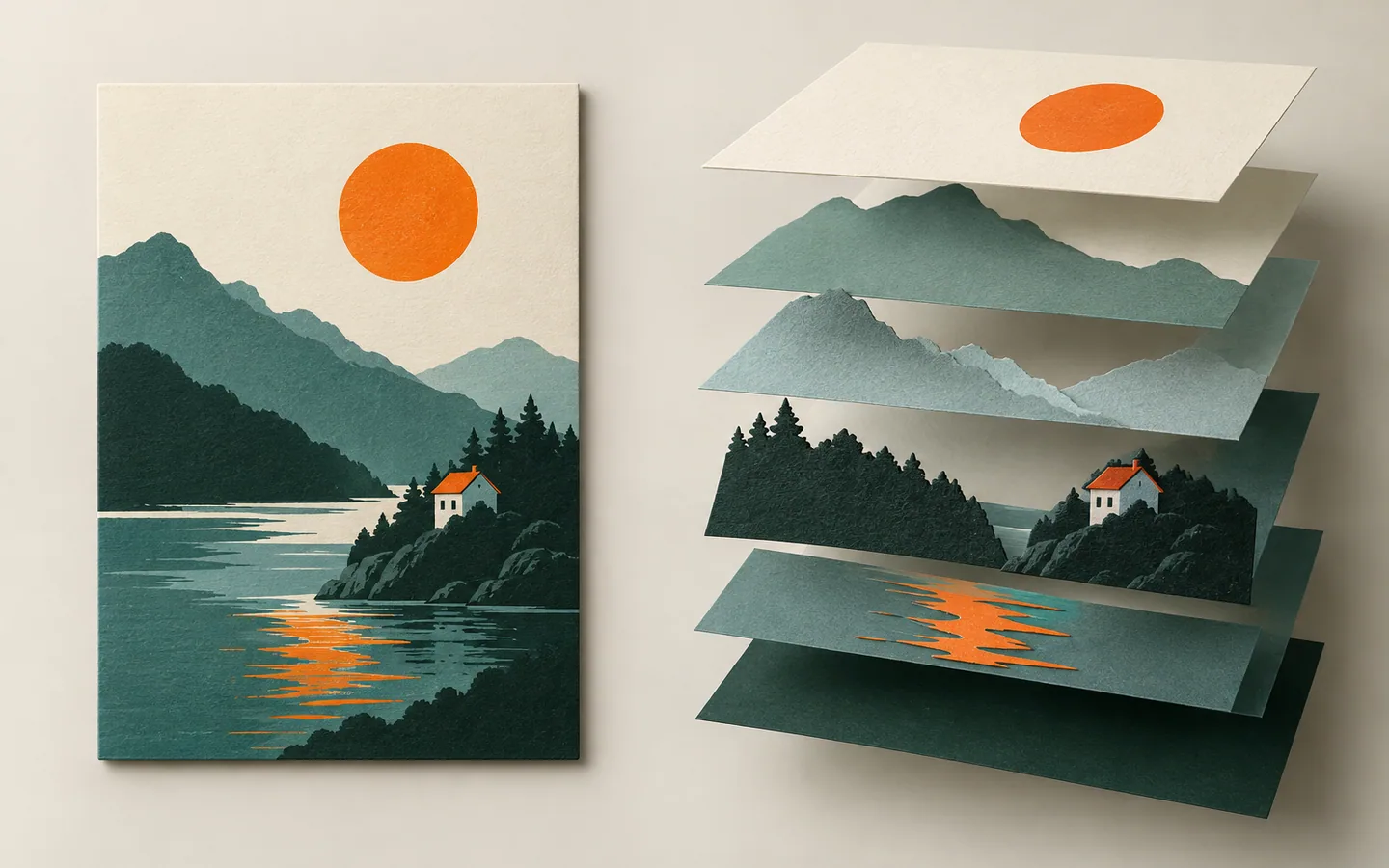
The important difference is not who generates the first draft fastest. It is what you can still change, verify and reuse afterward.
Read article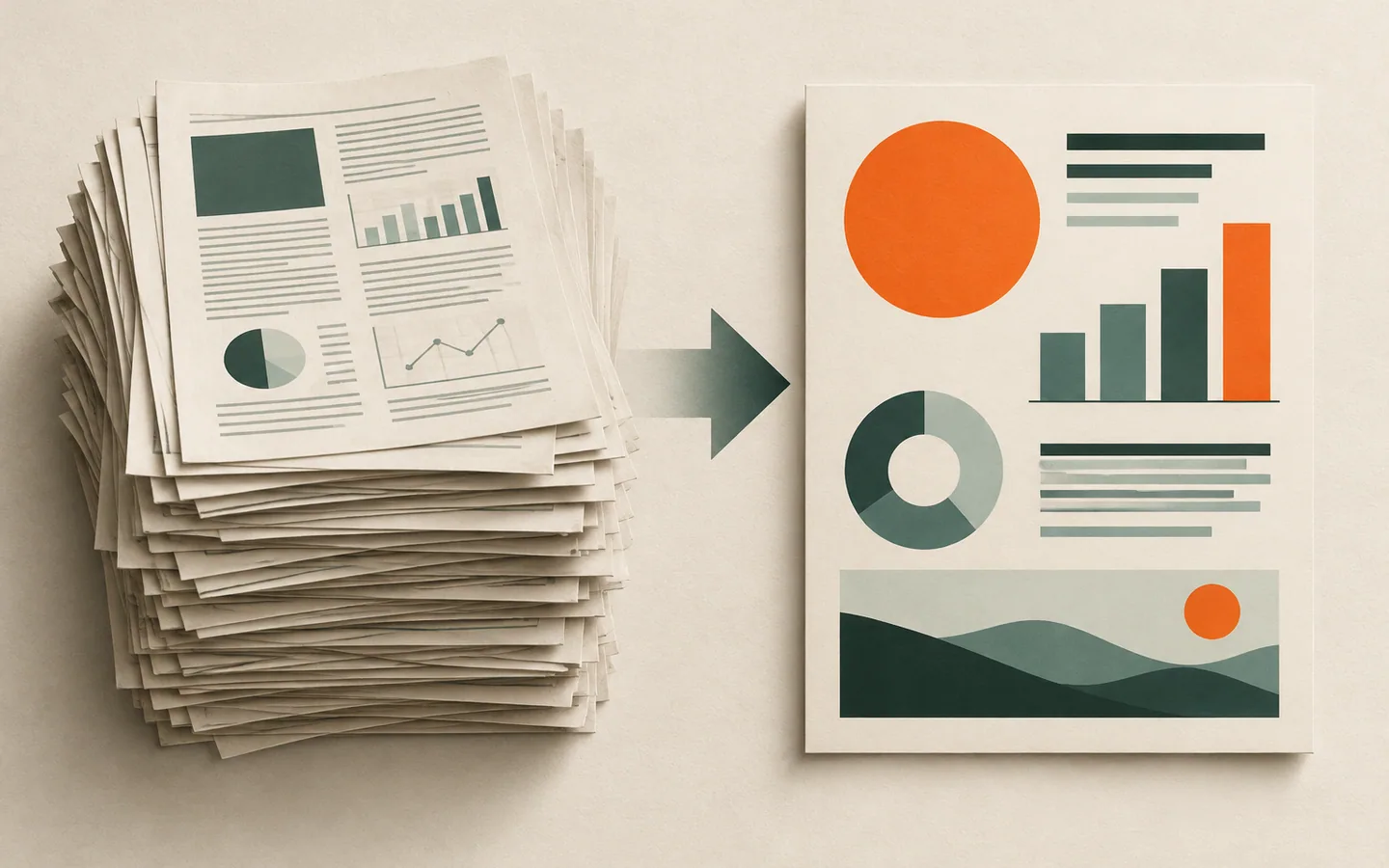
Start with the decision your reader needs to make, then give every section one clear job.
Read article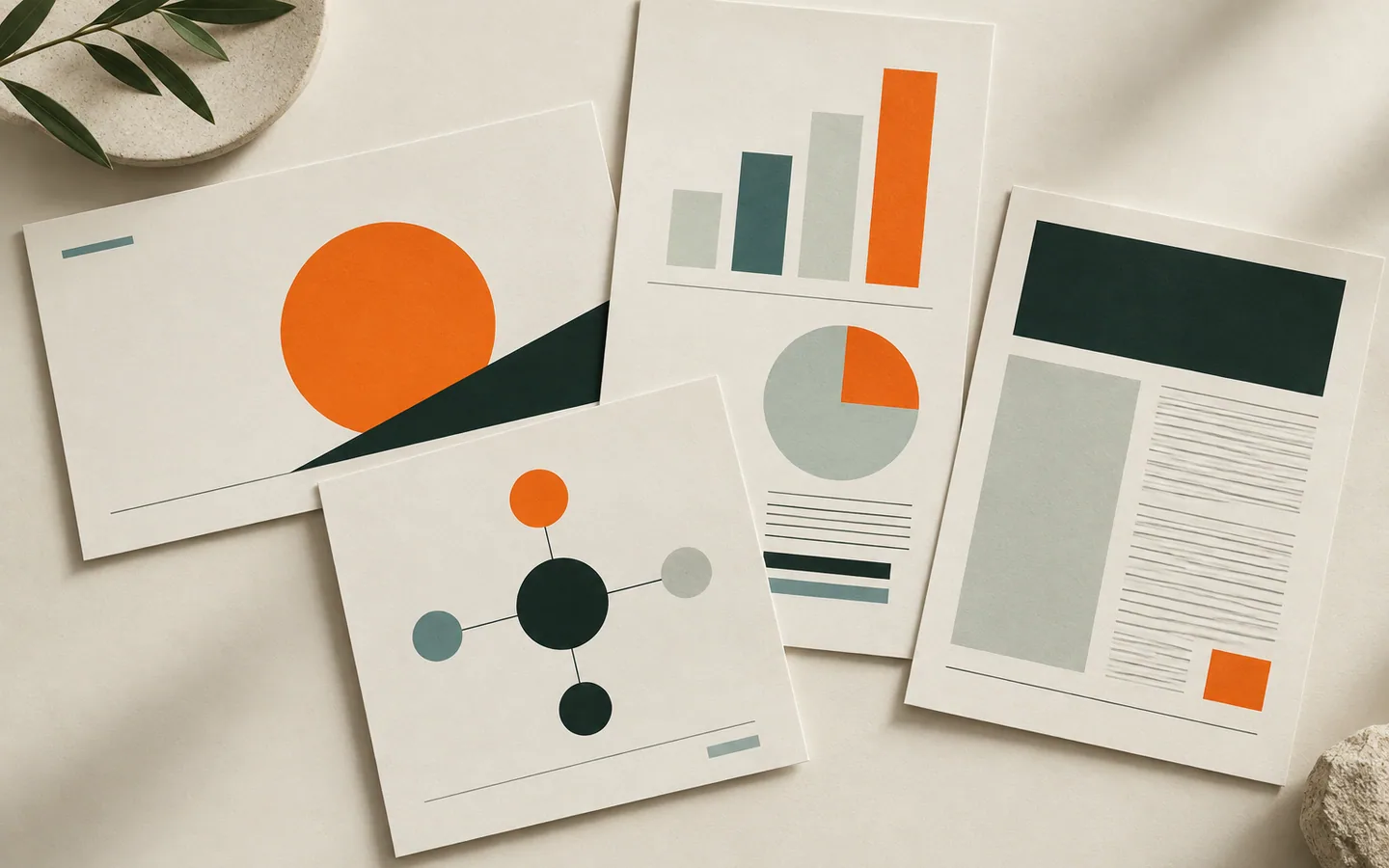
The right format depends on what your audience must understand, not what looks most impressive in a thumbnail.
Read article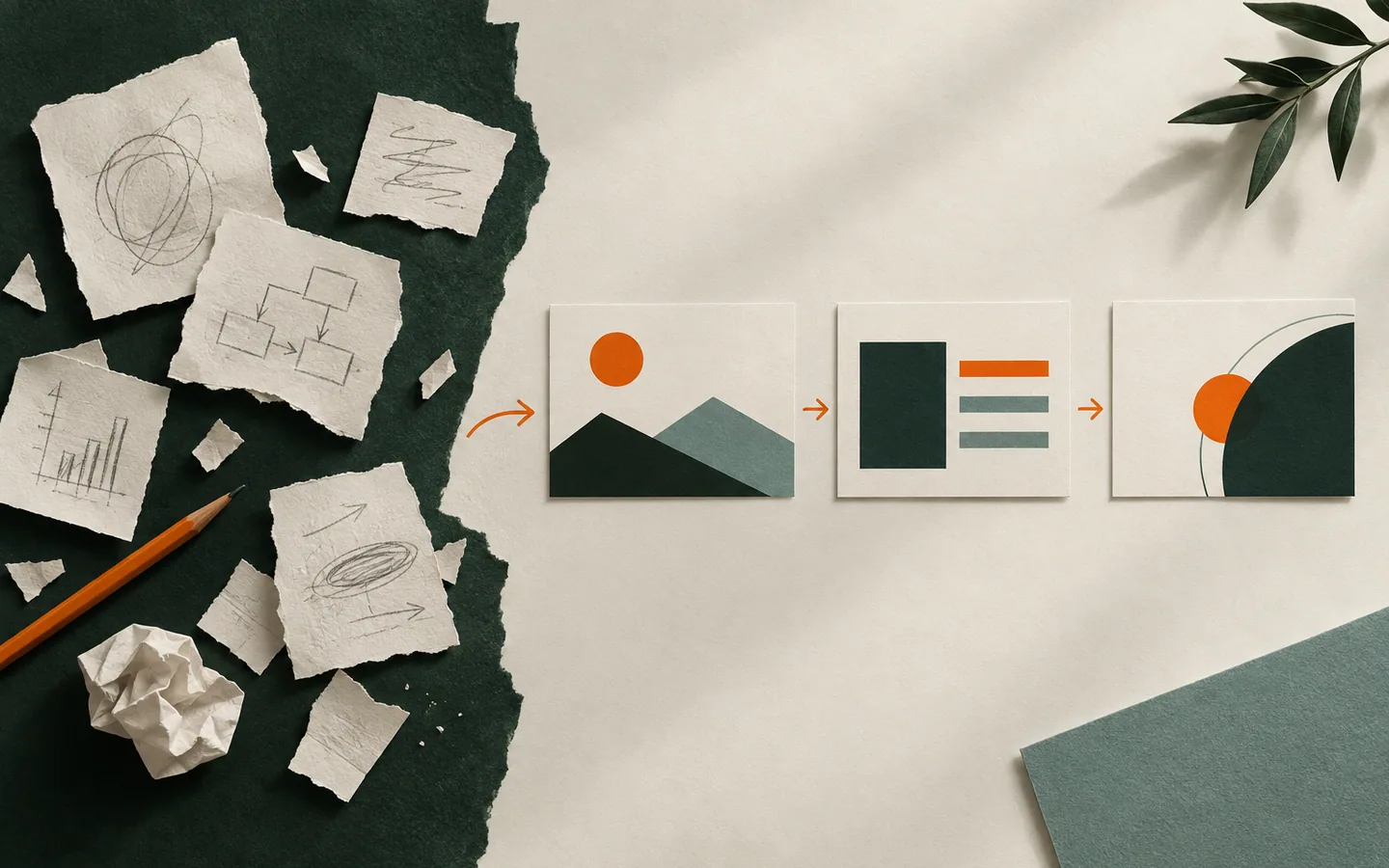
Before designing slides, find the one sentence each slide needs to earn.
Read article
Treat AI output as a first draft; editability and fact-checking turn it into work you can stand behind.
Read article
A process diagram succeeds when the next step is obvious and the exceptions are not hidden.
Read article
Recompose the story for each canvas instead of cropping the same design three ways.
Read article